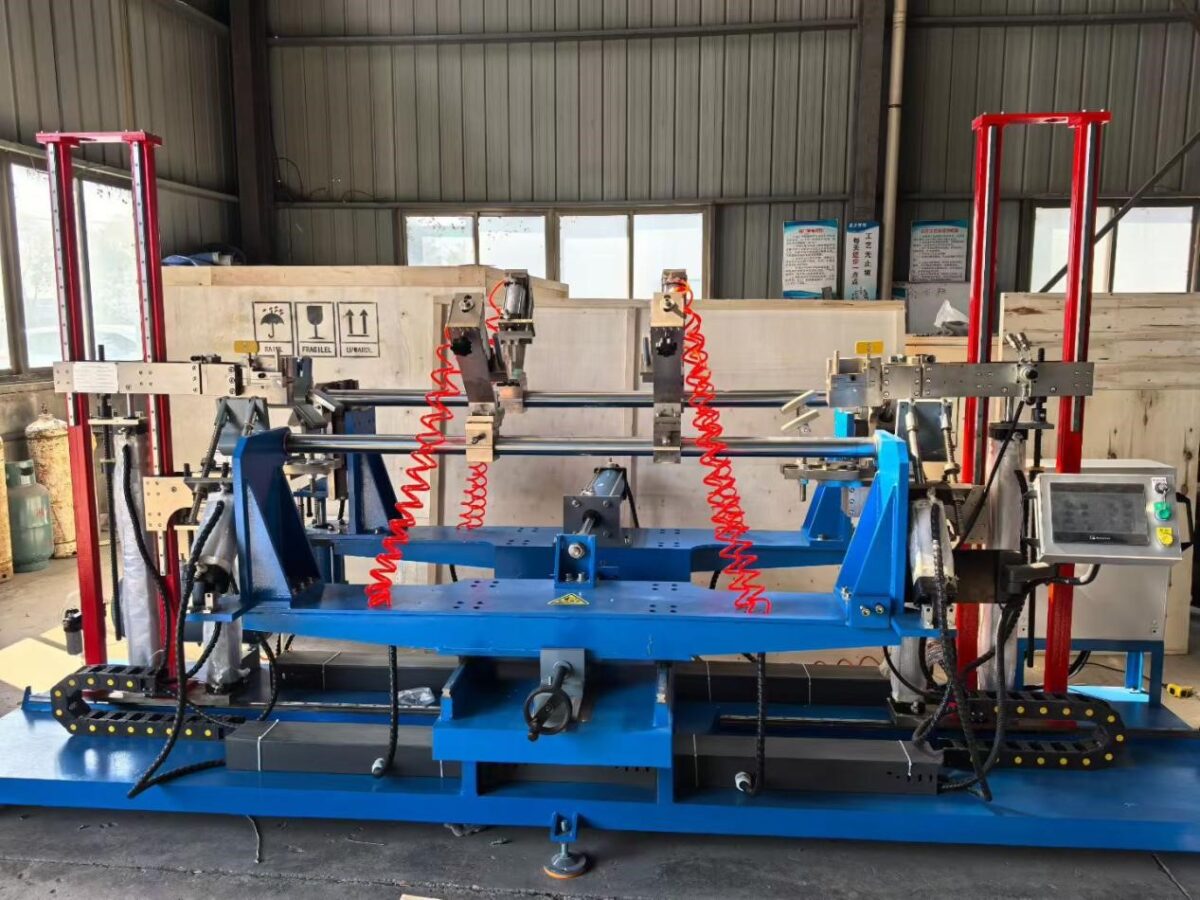
High voltage motors are designed to deliver reliable mechanical power in some of the world’s most demanding industrial environments. They are commonly used in large pumps, compressors, fans, conveyors, processing systems and other heavy machinery where dependable operation is essential. Manufacturing these motors requires a combination of specialised engineering, carefully selected materials, precise production equipment and rigorous quality checks. At the centre of this process is the high voltage motors making machine, a broad term covering the machinery used to manufacture and assemble the different parts of a high voltage motor.
Producing a high voltage motor is a highly controlled process. The stator, rotor, windings, insulation, shaft, bearings and housing must all meet specific requirements before they are assembled into a finished machine. Modern production equipment helps manufacturers maintain accuracy and repeatability while reducing the risk of defects. This is particularly important because high voltage motors often operate continuously and may be responsible for critical industrial processes.
The Main Stages of High Voltage Motor Production
The production process starts with engineering specifications. Before manufacturing begins, engineers determine the required output, voltage, speed, dimensions, cooling arrangement and operating conditions. These factors influence the selection of materials and the design of every major motor component.
Electrical steel is widely used to create the stator and rotor cores. The steel is formed into thin laminations that are stacked together. This construction helps reduce losses associated with circulating electrical currents inside the core. The laminations must be positioned accurately because poor alignment can affect the magnetic characteristics of the motor.
Core manufacturing equipment helps make this process more consistent. Depending on the production facility, machinery may be used for lamination handling, stacking, pressing and alignment. For large industrial motors, mechanical accuracy is particularly important because even small deviations can become significant when multiplied across thousands of laminations.
After the core is prepared, manufacturers move on to the winding system. Copper conductors are formed into coils and placed within the stator slots. The coil shape and arrangement must match the electrical design of the motor. Winding machines can control the positioning and tension of the conductor, making the process more consistent.
High voltage windings require extensive insulation. Unlike ordinary low-voltage motors, these windings must withstand much greater electrical stress. Insulation materials are carefully applied around the conductors, and the completed winding may undergo resin treatment or controlled curing to improve its mechanical and electrical properties.
The Importance of Insulation Quality
Insulation is one of the most important factors affecting the reliability of a high voltage motor. During operation, the winding experiences electrical stress, temperature changes and mechanical forces. If insulation becomes damaged or deteriorates, the motor may experience electrical faults or premature failure.
Manufacturers therefore use specialised equipment to apply insulation consistently. Machines may wrap insulating materials around conductors, press components into position or assist with resin application. Controlled curing systems can ensure that the insulation reaches the required condition.
The goal is to create an insulation system that remains stable throughout the expected operating life of the motor. Good manufacturing practices, appropriate materials and thorough testing all contribute to this objective.
Machinery Used for Rotors and Mechanical Components
The rotor is manufactured with a strong focus on dimensional accuracy and balance. Its shaft must be capable of supporting the rotating assembly while transferring mechanical power to connected equipment. Precision machining is therefore essential.
CNC machining equipment can be used to manufacture shafts and other components according to defined dimensions. Automated machining helps reduce variation and provides repeatable results. Components such as bearing seats and coupling surfaces need particular attention because their dimensions influence the way the motor operates after assembly.
Once the rotor has been assembled, dynamic balancing equipment is used to identify and correct imbalance. This process is important because a rotor can generate considerable vibration even when a relatively small mass is incorrectly distributed.
Excessive vibration can increase bearing wear, create noise and place stress on the motor housing and connected equipment. Proper balancing therefore contributes to smoother operation and longer component life.
The motor housing is also manufactured to precise requirements. It provides structural support and protects internal components from environmental conditions. Depending on the application, the housing may need to provide protection against dust, water, chemicals or other contaminants.
How Modern Manufacturing Equipment Improves Accuracy
The biggest advantage of using a modern high voltage motors making machine is the ability to maintain consistent production standards. Manual processes can be affected by operator fatigue and variations in technique, whereas properly configured machines can repeat the same operation with high consistency.
Winding equipment, for example, can maintain conductor tension and positioning. Core assembly machinery can help keep laminations aligned. CNC machines can maintain dimensional tolerances on mechanical components, while balancing equipment can identify problems in rotating assemblies.
Automation can also improve productivity. Repetitive processes can be completed more quickly, allowing production teams to focus on inspection, maintenance and engineering tasks. This can be particularly beneficial for manufacturers producing large numbers of similar motors.
However, automation needs to be combined with human expertise. Operators must set up machinery correctly, monitor production and respond to unusual results. Machines also require regular maintenance and calibration to maintain accuracy.
Quality Control Throughout the Production Process
Quality control is not limited to the final inspection. Reliable manufacturers monitor the motor throughout its production journey. Raw materials may be inspected before entering the factory, while dimensions and manufacturing conditions can be checked at different stages.
Electrical components require particular attention. Winding resistance, insulation condition and conductor placement can be assessed during production. Mechanical components can be measured to confirm that they meet the specified dimensions.
Digital monitoring is increasingly useful in modern factories. Sensors can collect information from manufacturing machines, while production software can store measurements and inspection results. This makes it easier to identify recurring problems and investigate their causes.
Maintaining detailed production records can also improve traceability. If an issue is discovered later, manufacturers may be able to determine which materials, machines or production conditions were involved. This information can support corrective action and continuous improvement.
Testing the Finished High Voltage Motor
Once the motor has been assembled, it undergoes final testing. Electrical tests are used to assess the condition and performance of the winding and insulation systems. Depending on the design and applicable requirements, testing may include insulation resistance, high voltage withstand and winding resistance checks.
More advanced tests may be used to identify partial discharge or other potential insulation problems. These tests can provide valuable information about the condition of the motor before it enters service.
Mechanical testing is also important. The finished motor may be checked for vibration, balance and bearing behaviour. Performance testing can assess characteristics such as current, output, efficiency and temperature rise under controlled conditions.
Testing helps ensure that the motor performs as expected and provides manufacturers with an opportunity to identify defects before shipment. For industrial customers, this additional assurance is valuable because replacing or repairing a large motor after installation can be expensive and disruptive.
The Growing Role of Automation and Digital Technology
The future of high voltage motor production is closely connected with automation and digital manufacturing. Modern equipment can increasingly communicate with monitoring systems, providing real-time information about production conditions.
Sensors can monitor variables such as temperature, machine load, operating cycles and other process parameters. This information can help manufacturers detect unusual conditions before they result in equipment failure or product defects.
Predictive maintenance is another useful development. Instead of servicing manufacturing machinery only after a failure, factories can use operational data to identify signs of wear and schedule maintenance at suitable times. This approach can reduce unexpected downtime and improve production planning.
Robotic handling may also become more common in large motor factories. Heavy components can be difficult to move manually, so automated systems can assist with lifting, positioning and repetitive assembly operations. This can improve workplace safety while maintaining production efficiency.
Energy efficiency will remain another major focus. Industrial customers want motors that provide strong performance while controlling energy consumption and maintenance costs. Improved materials, better winding techniques and more accurate manufacturing can all contribute to this goal.
Building More Reliable Motors for the Future
High voltage motor manufacturing requires cooperation between engineering design, production machinery, skilled technicians and quality-control teams. No single stage determines the reliability of the finished motor. Instead, performance depends on how effectively every stage is controlled.
A capable high voltage motors making machine supports this process by improving accuracy, consistency and productivity. From winding copper conductors to machining shafts and balancing rotors, specialised equipment allows manufacturers to meet the demanding requirements of modern industrial motors.
As factories become more automated and connected, manufacturers will have greater opportunities to monitor production, reduce waste and improve quality. Nevertheless, advanced technology will continue to work alongside experienced engineers and technicians rather than replacing them entirely.
The result is a more controlled manufacturing process capable of producing high voltage motors that can withstand demanding operating conditions. With continued improvements in machinery, materials, insulation and testing, high voltage motor production will remain an important part of the industrial equipment sector for years to come.